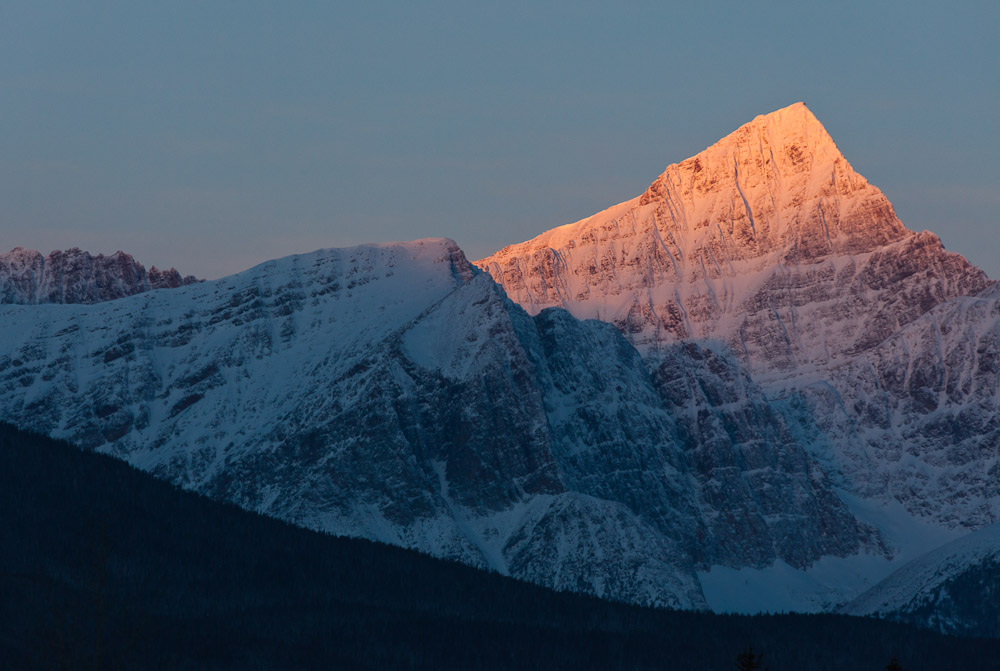
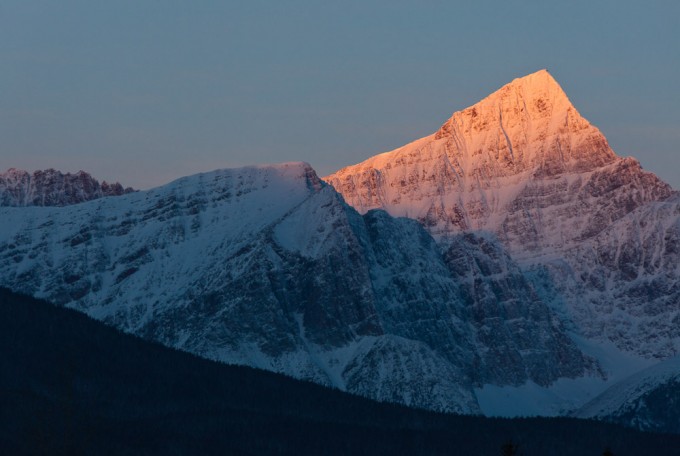
 First light on south face of Mount Edith Cavell Happy New Year! After a great trip to the west coast for the holidays, I had the pleasure of spending my first photography trip of the new year in the heart of the Rocky Mountains—Jasper National Park. I could hardly have asked for a better way to start the year than to be out there watching the sun come up over freshly snow-blanketed peaks, and freezing my fingers on my camera. I have a bunch of new photos that I’m excited to share, so check back soon!
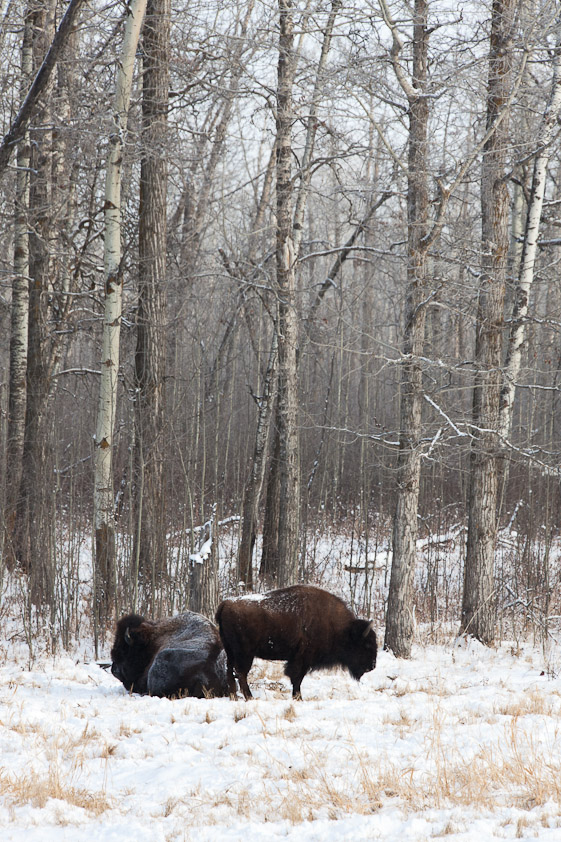
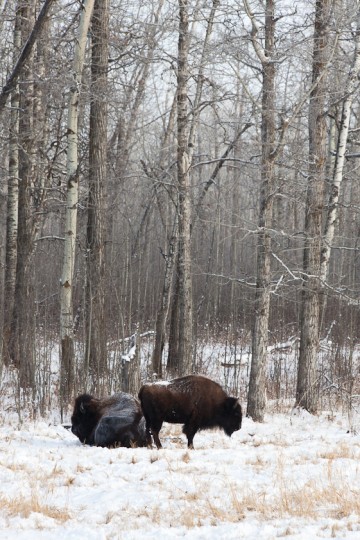 Resting winter bison It’s been a wintry couple of days in the Edmonton area, but these bison don’t seem to mind it. I took this photograph out at Elk Island Park recently, and I love how the fresh snow is just lying on top of the large bison. I had the good fortune of being able to watch a small herd slowly moving along and grazing through the snow for about an hour before they moved further off into the trees.
I made a lot of images of the herd, but I was surprised when I got home and could look at the photos large on my computer, how many times there were stray pieces of grass in front their faces—not necessarily ruining the shot, but definitely distracting. I guess it makes sense—the bison spent almost the entire time grazing with their heads just above the ground, and the dried grass was often over half a meter high. It’s just interesting how, while I was there, my brain could ignore the visual distractions, but at home, the light yellow-brown slashes against the deep, dark brown really stood out. Something to watch for next time…
P.S. I hope you like the “new and improved” larger in-post images starting with this entry. As always, you can click an image to view it full-screen. Enjoy!
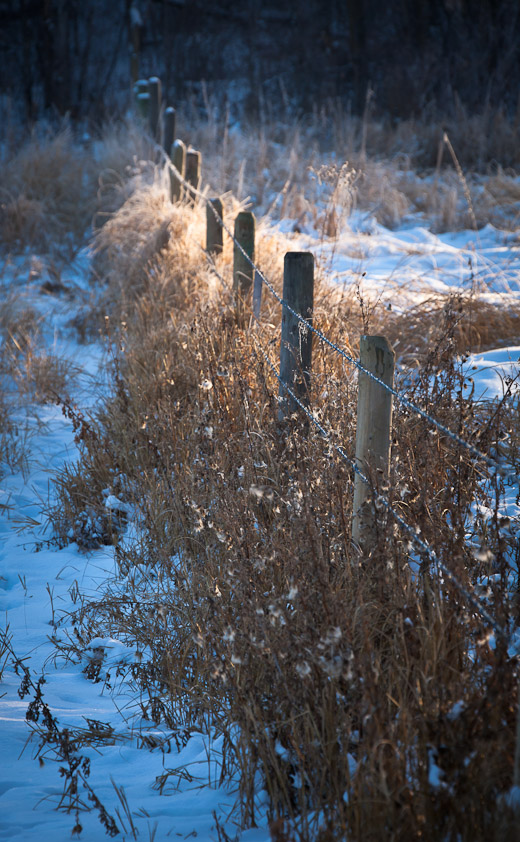
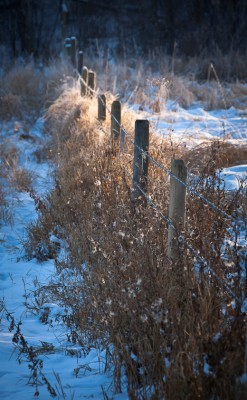 Dried winter grasses along barbed wire fence The “Golden Hour” is generally thought of as the first and last hour of sunlight in the day. During this time, the low angle of the sun casts soft, warm sidelighting that gives beautiful definition to a subject while keeping the contrast low and enhancing the rich colours. But during the winter, here at our northern latitudes, that light can last for most of the day.
It’s not uncommon for landscape photographers to pack it in after first light, however another Edmonton photographer whose work I really enjoy, Joel Koop, recently wrote a pair of blog posts (here and here) sharing how he takes on the challenge of mid-day light. I couldn’t agree more with him, and especially at this time of year I love to be outside in the afternoon, looking for just the right patch of light. (I took the photograph above in late November at just before 3 in the afternoon.)
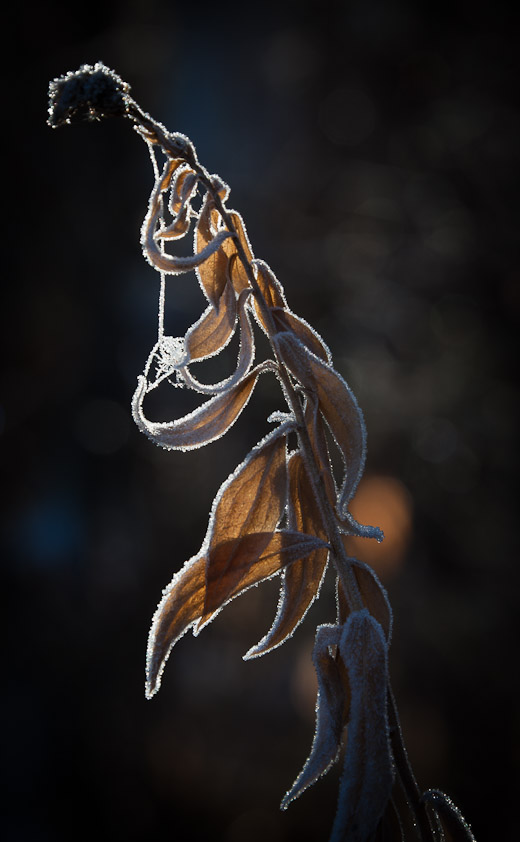
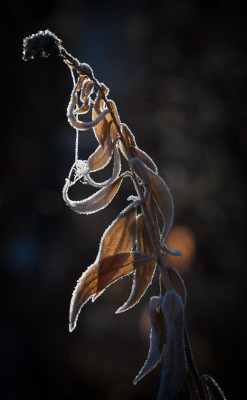 Dried Goldenrod leaves with hoar frost Although this photograph was from a little earlier in the season than my last post, it was a similarly frosty, beautiful day. It’s amazing how a lining of frost can add definition and visual interest to an otherwise subdued scene. This is especially true when photographing with the sun behind your subject, the backlighting making the frost shine while the rest of the subject remains shadowed. I also added a fairly heavy vignetting effect while processing this image, to further draw attention to the lines created by the curled, dried goldenrod leaves.
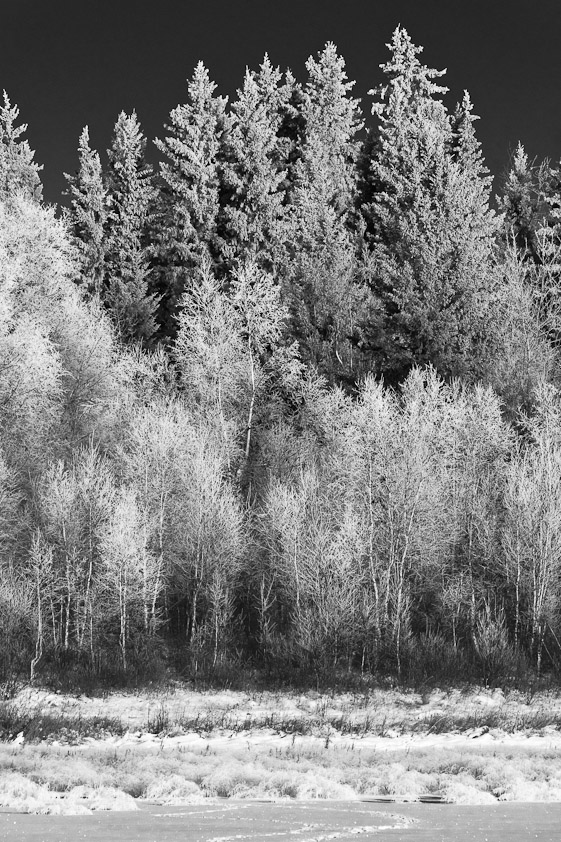
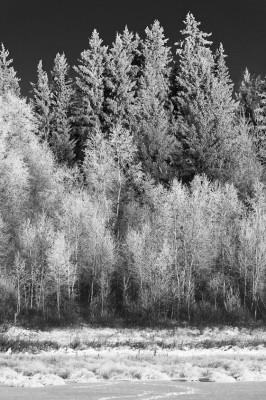 Frost covered trees on bright winter day It’s been too long since I last posted a new photograph—my apologies. Here is an image I made recently, on a particularly gorgeous afternoon at the Ministik Lake Game Bird Sanctuary just east of Edmonton. All of the trees, shrubs, and even each blade of grass was bearing a thick covering of frost. The sky was perfectly clear and everything was sparkling—it was beautiful (and cold).
When I was processing this photograph, I used the digital equivalent of the technique of placing a red filter in front of the lens to darken the blue sky. This technique (a favourite of Ansel Adams) adds a dramatic look to the sky and making the brightness of the foreground trees stand out even more.
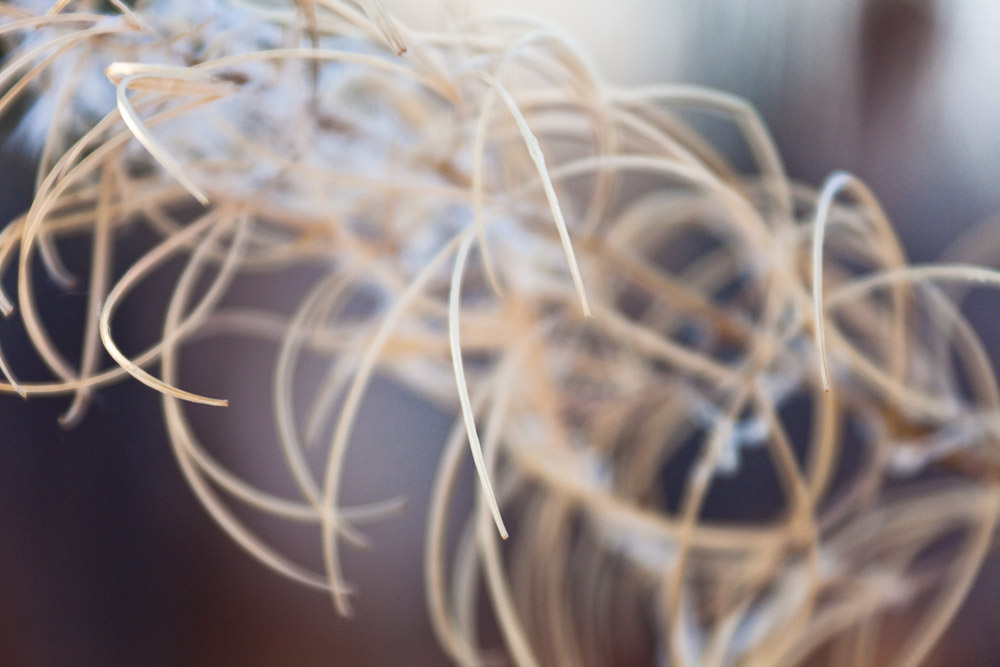
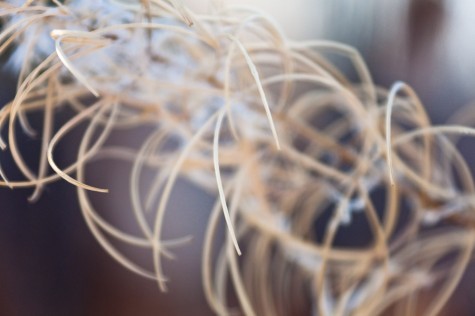 Curves in dried fireweed I know it’s odd to call this post “Dried fireweed detail” when 95% of the photograph is out of focus. For me however, this image captures the essence of the detail—and the depth—of the dried seed pods. The title’s also a bit if a play on words—using “detail” in the sense of a close-up of a portion of a larger work, like when a small section of a painting is enlarged in a book to show a painter’s technique, for example. I really enjoy getting in close to a photographic subject to look for an angle that can capture the greater “whole” of the subject while showing only a small portion.
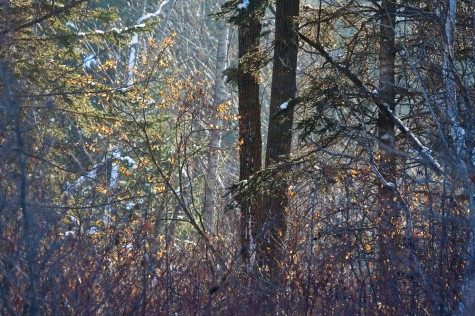 Warm winter colours I took this photograph during a beautiful lunch-time walk through the Whitemud Ravine. Although it was mid-day, because of the season the light was angled low and filtered through a very light haze, giving it a warm tone. It’s unusual to see warm-toned colours much during the winter, but if you catch it just right they can add an interesting mood to an image.
|
(Click photos to enlarge)
|