
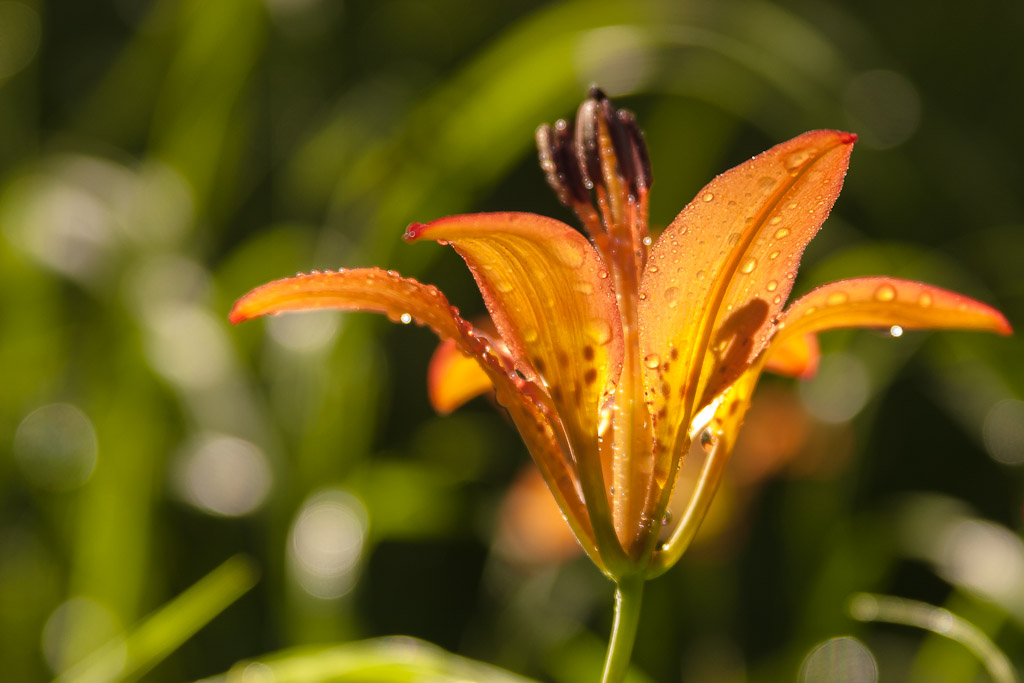
Fresh rain on summer Tiger Lily
This one is for my wife today.
|
||
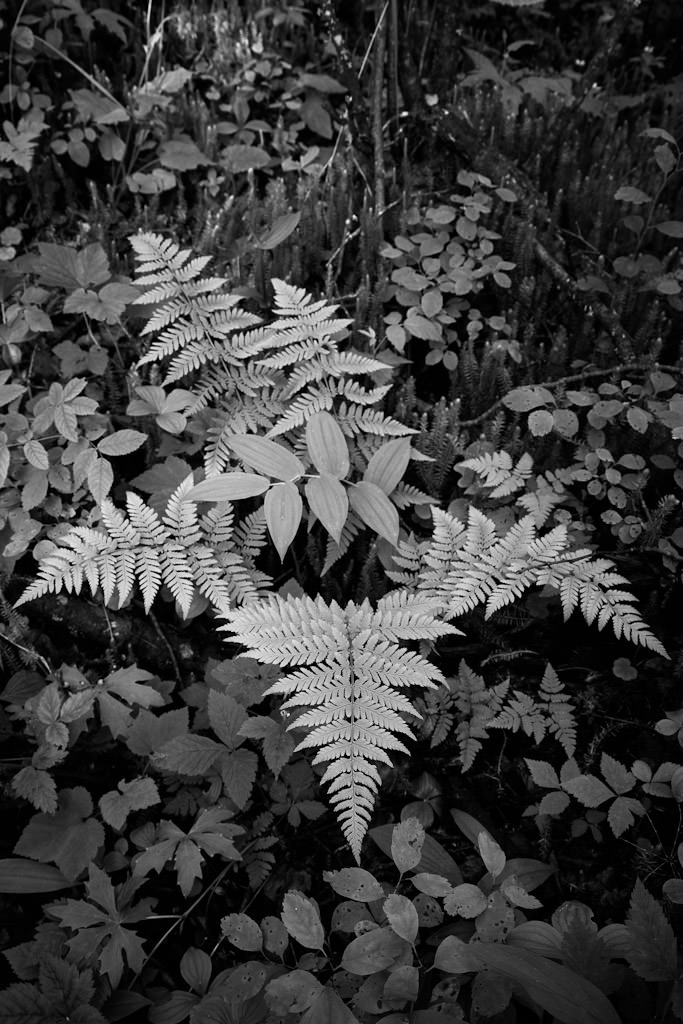 Boreal fern A good friend of mine, an old BC Parks naturalist, shared with me the following short verse that I am always reminded of when I come across ferns like the ones in this photo: 
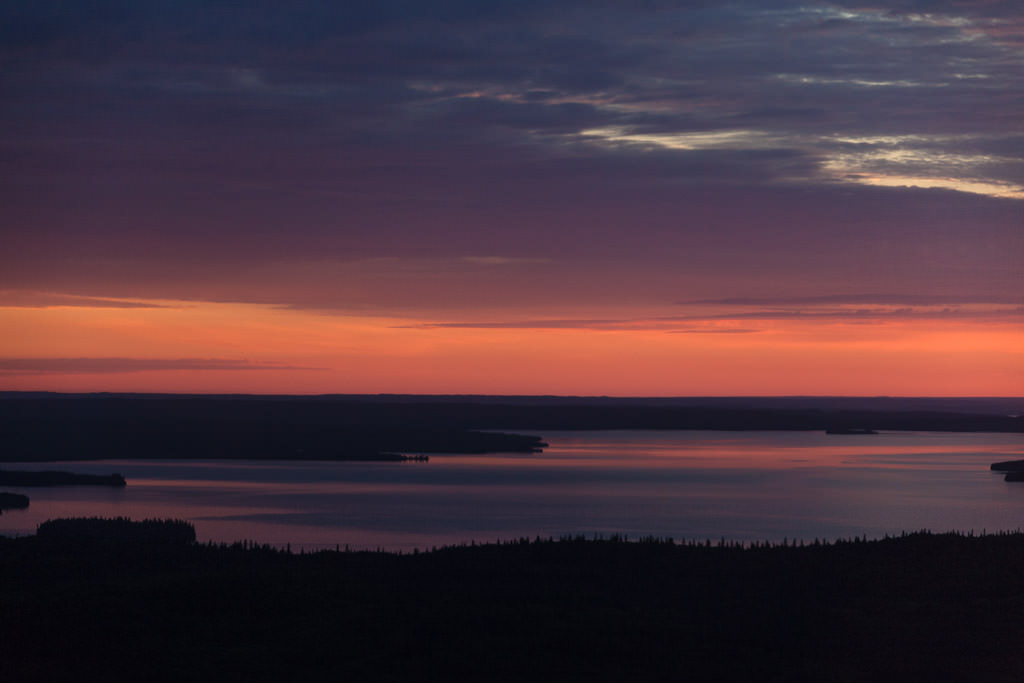 Sunrise over Namur Lake I took this photo on my way to work earlier this summer—I just happened to be lucky enough to be commuting in a helicopter out to a gorgeous old-growth boreal mixedwood site about 100km north-west of Fort McMurray to do bird surveys for the morning! It was a neat experience to get to spend so much time flying over the boreal landscape that I know so well from the ground, and to get a bit of a different perspective on things. I’m sure I’ll print and share here a few more photos from my past couple shifts up there. I notice when I look through my photo archives, that my colour palette tends to be rather subdued, even sombre at times. If I then look through the photographs made by other photographers that I’ve marked as my favourites, (primarily on the terrific photography-sharing website 500px.com (here’s my 500px collection and my favourites from other 500px photographers)) I notice that the overall impression is very similar—I guess it turns out that’s just what I’m most drawn to… So, for today’s print I decided to choose an image with a bit of colour. I chose this photo in particular because of the bright, highly saturated orange/red band on the horizon. When Lightroom 4 was released (the software I use for 95% of my processing), I’d read about its new soft-proofing ability (here’s another good article as a pdf), but never actually used it before. I was pretty sure the intense warm colours in this image would be out of gamut for my printer and paper combo that I’m using for this Daily Print project (an Epson 3880 and Canson Baryta Photographique). Sure enough, Lightroom was showing me clipping warnings, but with just a little finessing (lower saturation and highlights, increase vibrance and contrast, tweak tone curve, etc), I got it looking good, and not showing any clipping. I ran the print off, and was quite impressed how closely the print matched my monitor. I’m looking forward to seeing the print in the daylight tomorrow…
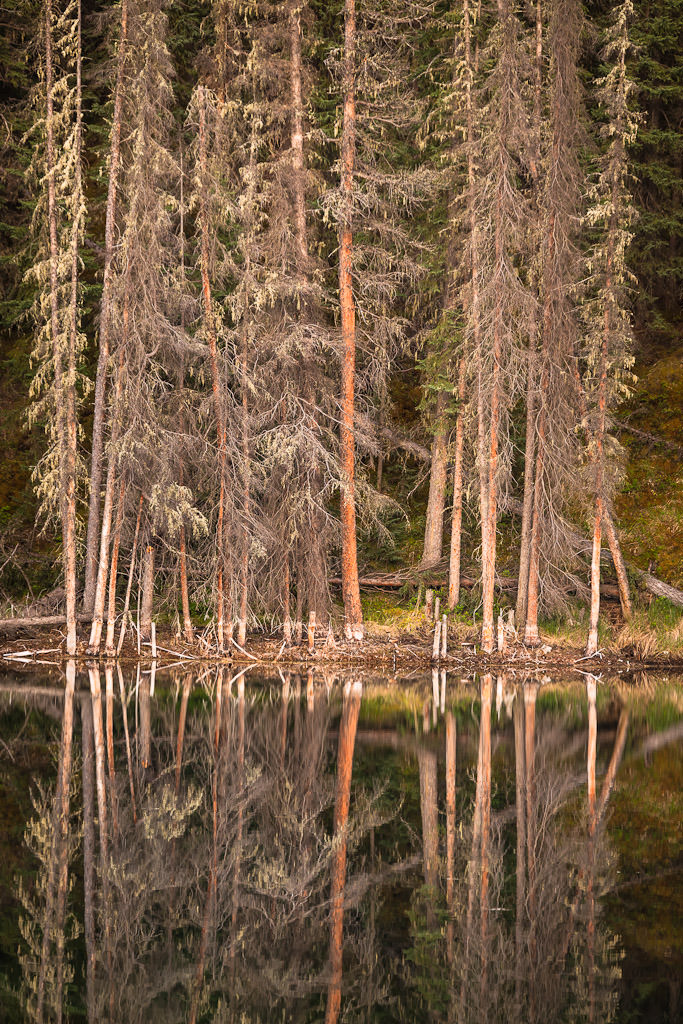 Spruce reflections in Emerson Lake I made this photograph last summer at Emerson Lakes, easily one of the most beautiful campgrounds I’ve stayed at in Alberta. The weekend I was there was perfect for camping, yet we still had the place nearly to ourselves. There are several lakes, all surrounded by steep ridges (unusual for boreal Alberta) with a hiking trail weaving around them. Sundance Provincial Park is nearby with more hiking (to hoodoos!), and even a multi-day backpacking route. I can’t recommend this spot enough if you like quiet, out-of-the-way camping spots. The detail I like best about this photo is the line angling up and left from just above the shoreline on the right. The line is initially, and most strongly, created by the fallen spruce trunk but in the centre of the frame, the fallen tree becomes hidden but the visual line continues along first one branch and then, more weakly still, another branch. I find that this angled line and its reflection, create a subtle point of interest for the eye to follow through the otherwise very vertical composition.
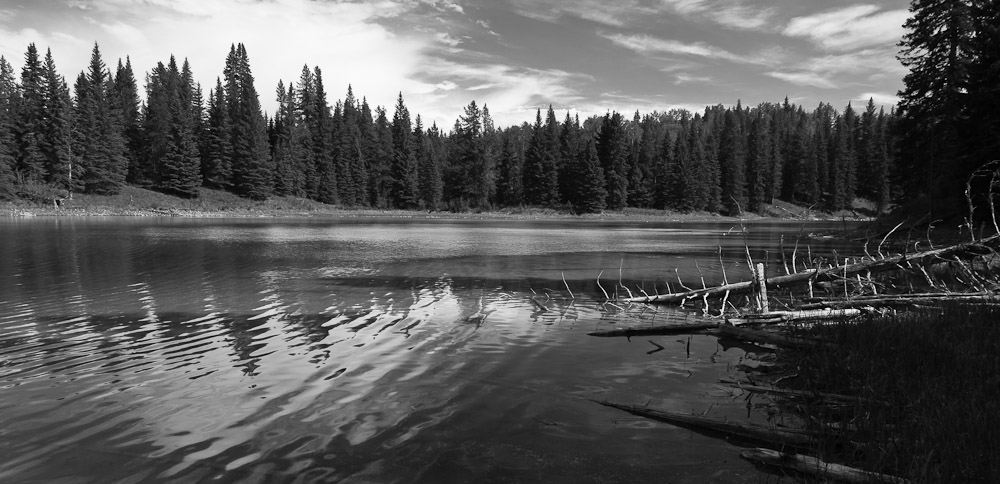 Greytones in boreal lake I took this photograph at one of the five lakes in Emerson Lakes Provincial Park, northwest of Edson, Alberta—a great little place that was almost completely deserted the weekend I was there. If you don’t mind a little bit of gravel road, I would definitely recommend this spot for a quiet boreal retreat. Although the middle of the afternoon is not normally the best time of day for making photographs of the landscape, great photographs are still out there—and (if you ask me) any photographer that tells you otherwise isn’t looking hard enough. In this image, made at just past 4pm on a nice sunny day, I just love how the lake holds nearly the full range of tones from the nearly black shadows along the shoreline to the bright white reflections of the high cirrus clouds and the midtones of the shallow lakebed itself—all mixed together by the slight breeze causing the ripples on the water’s surface. Add in a couple Bonaparte’s Gulls, a pair of Belted Kingfishers, and a chorus of songbirds—and you’ve got yourself a pretty good spot to sit for a while, making photographs as the clouds shift by (which is exactly what I did…)
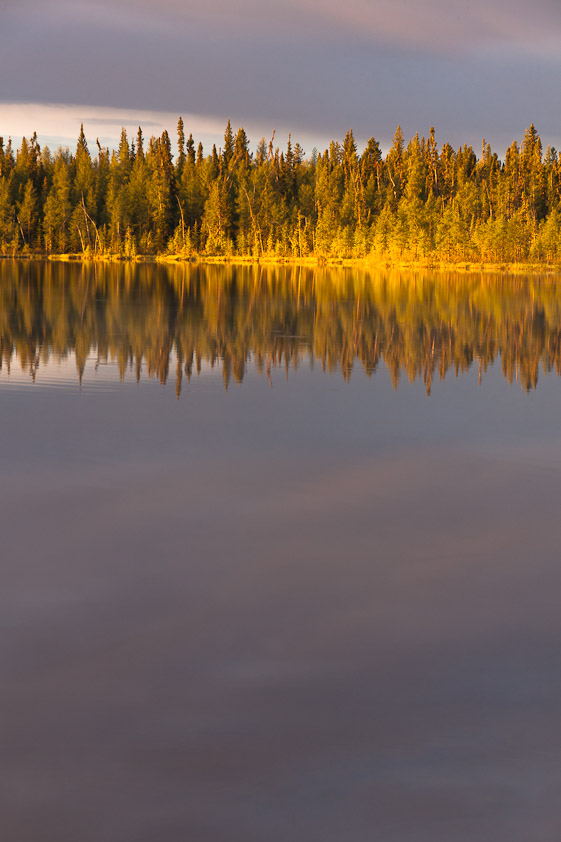 Golden sunlight on spruce shoreline This photograph is from a gorgeous morning that I spent in the Obed Lake Provincial Park in western Alberta. This is not actually Obed Lake itself, but one of the smaller lakes in the park. There were loons swimming around, sparrows and warblers singing, and it was too chilly still for the mosquitoes to be flying—perfect. The yellow colour in the image is actually toned down a little from what it looked like straight out the camera—it was really yellow. (I guess that’s why they call dawn and dusk the “golden hour”.)
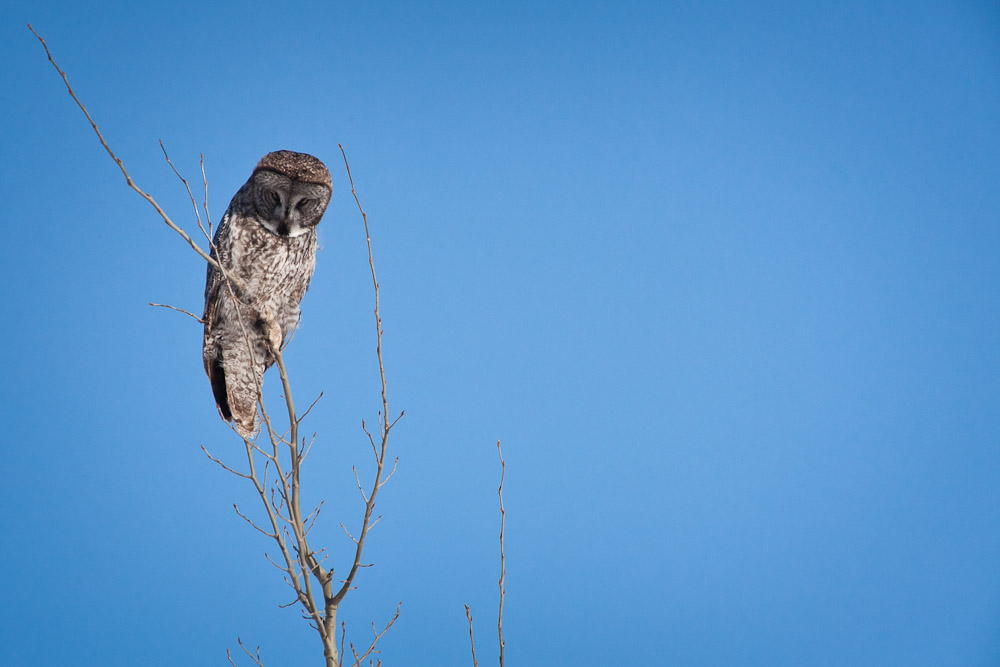 Great grey owl hunting from thin aspen sapling The photographs from my two previous posts were both taken while I was doing owl surveys and waiting for the sun to set (with camera at the ready, of course). So I thought I’d post an image of what we were out there looking for. I don’t shoot a lot of wildlife, but I simply could not resist filling up a memory card while watching this owl hunt for rodents under the thick, spring snow. It was amazing to watch him (or her, I’m not sure) listening from the tops of these small aspen trees before swooping down and diving feet-first into the snow after his prey. I had the pleasure of watching from a distance for over an hour before he finally gave up, or got full, and slowly moved off.
|
||
|
Copyright © 2009-2026 Jonathan Martin-DeMoor 
|
||